Humanization as the Goal of Economic Life
Oct. 7, 2026
Humanization as the Goal of Economic Life
Oct. 7, 2026
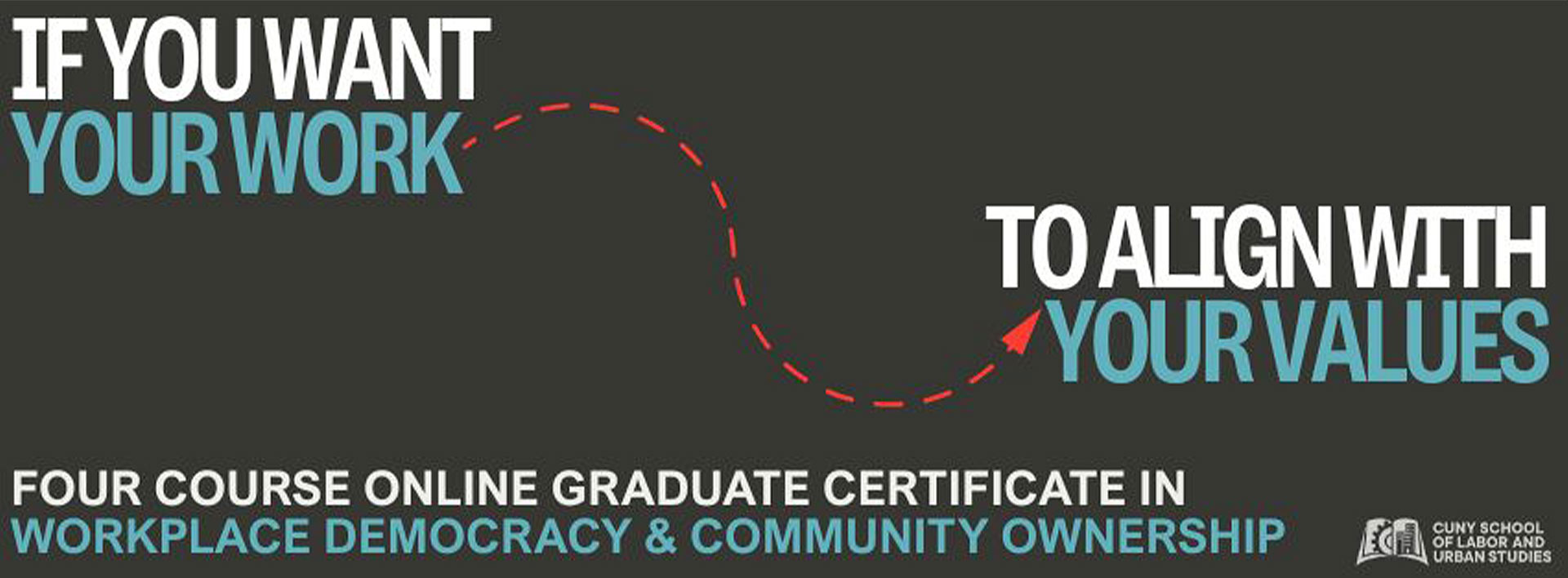
This post was motivated by an assignment in my URB 623 - Operations: Finance and Law in Cooperative Enterprises, in which we were asked to reflect on our experience in the class so far, and to evaluate one or more of our assigned readings. Since one of our readings serendipitously coincided with my participation in the Virginia Solidarity Economy Network (VASEN) retreat this weekend, I have chosen to focus on that one.
The article is The emergence of the United States Solidarity Economy Network by Ana Margarida Estevez, which appears as chapter 5 in the book, The Solidarity Economy Alternative: Emerging Theory and Practice edited by Vishwas Satgar.
I was overjoyed to given this article, since I've been personally involved in starting a solidarity economy group, NOVASEN, with the goal of making it a local group affiliated with with VASEN, which is in turn affiliated with USSEN, which is itself affiliated with the Intercontinental network for the promotion of social solidarity economy (RIPESS), thus invoking the whole "think globally, act locally" mantra.
An Emerging Movement
The first sentence in the article states that "[t]he solidarity economy movement in the US is a recent phenomenon." The term solidarity economy only began to be used in the United States in the mid-2000s, and the movement only began to take real form with the establishment of USSEN at the U.S. Social Forum in Atlanta, Georgia during June of 2007.
The article describes how USSEN emerged right before the pending financial crisis. Ana states that it was motivated "as a way of promoting the transition from capitalism to a post-capitalist economy." She says that "[l]ike its counterparts around the world, USSEN envisions a transition from a disembedded, finance driven economy centered on capital accumulation to a post-neoliberal economy that is community-based, needs-centered, non-exploitative and non-competitive." A few years ago I got involved with the Next-System project, which seems to very closely align with this description of the goals of USSEN.
The next section of the article is devoted to describing how neoliberalism emerged from the crisis of Fordism in the 1970s, and how USSEN emerged more than three decades later in response to the crisis of neoliberalism. Rather than representing a structured model, the discourse and approach of USSEN is "an emerging framework of communicative action based on cooperation/solidarity, reciprocity, participatory democracy, sustainability, equity in all dimensions, pluralism, horizontality and the prioritization of collective needs over capital accumulation."
Ana then describes the divergence within the movement between its reformist and revolutionary trends, stating that the reformist trend regards the solidarity economy as part of a mixed economy in which soidaristic organizations exist side-by-side with public and private market sectors, while the revolutionary trend sees it as a forerunner of a future socialist economy.
The article then describes the movements "methodological goals", including networking among solidarity economy actors, developing linkages among them and supporting their growth through capacity-building, promoting the replication of best practices, and promoting the development of a new solidarity economy based economic culture. It explicitly mentions the fostering of collaboration between academics and practitioners, something I have also seen stated as a central focus of the Next System project.
The next section describes the composition of the solidarity economy, listing complementary currency systems, community development financial institutions, cooperatives, community development corporations, community land trusts, social enterprises, community supported agriculture, and fair trade as composing the solidarity economy (I feel the urge to say at this point that the fact that each of these has a fairly well developed Wikipedia page suggests that at least some folks within the solidarity economy movement are taking seriously the goal of broad based community education ;-)
The next several pages are devoted to the origins of the solidarity economy beginning with the Owenite communities in the early 19th century, through the civil rights movement in the middle of the 20th century to the emergence of the concept of the solidarity economy in the late 1990s.
The last part of the article focuses on USSEN's "strategies for collaborative capacity-building", with special attention to participatory action research, which it lists as centering on localisation, creation, production, transfer and exchange, consumption or use, surplus allocation and governance.
Reflection
I found this article, particularly through the process of summarizing it here, helpful in broadening my understanding of both the history and extent of the solidarity economy movement. Despite being actively involved with it for several years, much of the information in the article was new to me. As a high school teacher dreaming of completing a solidarity economy textbook over the next several years for use with my entrepreneurship classes, it was great to add another case study, The Farm Community, to my growing list of real world examples of solidarity economies in practice that seem to have both at least a modicum of real world impact as well as enough staying power to endure much longer than their Owenite predecessors did two-hundred years ago.
While it was very useful, its 2014 publication date also makes it a bit old, particularly for documenting something as new and rapidly changing as the solidarity economy movement. I'll be sure to ask our professor, Andrés Bernal, why he chose such an old article for us to use on this topic. Are there no newer resources, and if not, why not?
The Solidarity Economy Movement in Virginia
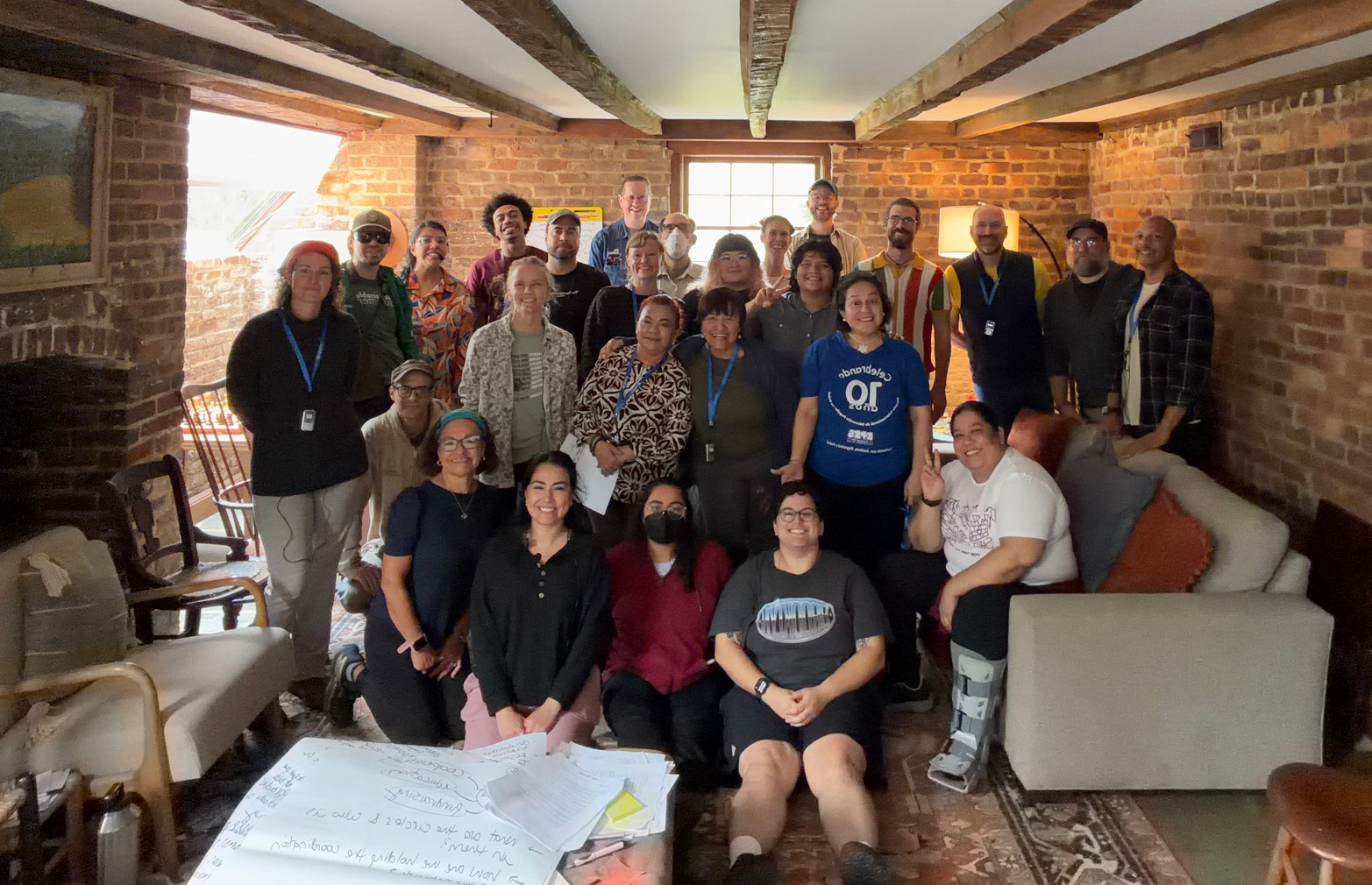
The VASEN retreat this past weekend brought together twenty-six solidarity economy activists from the Shenandoah Valley, Virginia Mountains, Central, and Northern regions of Virginia regions of Virginia. Many of us were meeting each other for the first time, and it was an inspiring and invigorating two days of breaking bread with comrades involved in many solidarity economy activities that I was not aware of until coming here to hear about them first hand.
I learned about Mindful Maker Manufacturing Worker Coop and met two of the folks who are part of that co-op. I got to speak with the staff person from Common Shares, Lydia Hatfield, and was thrilled to learn that Lydia completed the Advanced Certificate in Workplace Democracy and Community Ownership (WDCO) program which includes the class for which I am writing this post. She had a class with our instructor, Andrés Bernal. I didn't ask her if she has stayed in touch with him to let him know what she's up to now, but I will certainly bring it up in our next class. I'll also add to my class reflection that knowing the staff person for Common Shares went through WDCO too confirms for me that I did the right thing enrolling in our program.
I met a graphics designer from Richmond and an economist with deep insight into the economics of money. I got talk with the documentary producer of Life in the Heartland: Worker Owned Businesses, Lysandra Petersson, about her plans for doing solidarity economy education in Staunton, Virginia, where I have a good friend whom I hope would attend events she ran there.
I also got to hang out with my comrades Dilicia, Leslie, and Elizabeth from SECOSOL, and fellow NOVA Web Development worker / owner Kei Larios. My wonderful wife Roxana joined us for the weekend too. She is freshly retired, and I believe she left the weekend inspired to volunteer with SECOSOL.
It was a fulfilling, inspiring and motivating weekend. I plan to actively reach out to several of the folks I met there, and to actively participate in the organization circles we all agreed to create at the end of the retreat in order to carry our work forward.
Yet inspiring as it was, the experience also reminded me of just how far we have to travel to even begin the collective creation of the solidarity economy we so desperately need. The sum total of the land, labor and capital we need to have a real impact on our world was woefully lacking among us. We are at present more of a small countercultural movement than a real economic force for change, and we will remain so until we find a way to dramatically increase our economic power. I believe changing this reality has to be our main focus.
Where We Go From Here
I have long described myself as a Freirean, since the revolutionary Brazilian educator's assertion of humanization as our "ontological vocation" has proven to be a continual guide to me, both practically and spiritually. To help human beings realize their humanity requires the humanization of economic life, and this very goal should be the central focus of the solidarity economy movement.
That goal requires us to be willing to not only name, but to build the world we want to live in. The global economy that capitalism has built is an incredibly vast, globe spanning interconnected network of material, energetic and information flows. If we are serious about wanting to create a solidarity economy to replace our current destructive and extractive one, we will need to learn how to organize production, which in the 21st century means managing supply chains and information networks, and evaluating both the human and environmental impacts of our production processes.
It will also mean navigating what are certain to be challenging contradictions between providing the kind of material life we humans want and living within the boundaries of earth's finite ecosystems, a challenge economist Kate Raworth refers to as doughnut economics.
Over the next few years, I hope to see measurable progress in both of the two intersecting economic / political regions where I live, Virginia and the DMV, toward advancing our economic power to begin building the solidarity economy. As long as my health and mental acuity cooperate, I promise to do what I can to actively engage in this struggle.
In solidarity
Jeff Elkner
7 October 2026