Why Socialists and the Solidarity Economy Movement Need Each Other
Feb. 12, 2025
Why Socialists and the Solidarity Economy Movement Need Each Other
Feb. 12, 2025

I've identified as a "socialist" since first becoming radicalized back in the early 1980s. My timing may seem increadibly unfortunate. I became a socialist just as the neoliberal monster was rearing its ugly head, preparing to eat the world and then vomit back all over it, and only a few years before the Soviet Union would collapse, socialism would be pronounced dead by its adversaries, and the uni-polar "end of history" would be proclaimed.
Well I am old now, but I'm still at it. Now it is the neoliberal monster's turn to die, and it turns out history isn't over yet after all. The question before those of us who value human beings and wish to be in solidarity with them is where is our road forward? This is a question that has been driving me for decades, so I've spent a good part of my life thinking about it.
Why Socialists Need the Solidarity Economy Movement
In 2012 I "caught the worker coop bug", and I have been dedicating most of my gradually decreasing energy toward helping to build the solidarity economy ever since. It has been more than a little disappointing during this past decade to often find myself the only self-identified socialist among my solidarity economy comrades. Don't get me wrong, we need to build a big tent, and I love my anarchist, left libertarian, and other schools of thought comrades, but I'm a die hard Marxist socialist, and it has been frustrating indeed to find so little interest in talking about the solidarity economy with socialist comrades both within and around the socialist organizations of which I am a part. Happily, I believe this is about to change.
The Eco Radicals: The Legacy of Revolutionary Cooperatives seminar I'm taking is proving to be every bit as inspiring and helpful as I hoped it would be. One of our recommended readings, Worker Co-Ops Have a Role to Play in Socialist Strategy, is just the article I've been waiting for. It lays out a cogent argument for why we socialists should be paying close attention to the solidarity economy movement.
Author Daniel Wortel-London first describes the 1910 Second International resolution supporting cooperatives, which stated that workers should support cooperatives because they:
- help roll back the evils of private commercial firms
- better the condition of the working classes
- educate workers in economic democracy
- furnish much-needed revenue on behalf of socialist unions and labor parties
The resolution declared that "trade unions, cooperative societies, and the socialist party... while preserving each its own unity and autonomy, should enter into relations more and more intimate with one another."
In the next paragraph Dr. Wortel-London takes us from 1910 to 2024 and says that in our current discussion of political strategy, "[i]t is clear that electoral campaigns on their own and short-lived protests are not enough to win durable victories." He follows this with an observation that made me feel like I was not alone, "unlike socialists of the past, the contemporary left’s discussions have largely ignored the strategic role that cooperatives - and the solidarity economy more generally - ... can play in building up the Left’s power."
The article explores the many ways that attention to the solidarity economy could help rebuild the left, addressing each of the still valid ideas from the 1910 resolution. He then discusses a benefit that was not present in 1910, but which resonates particularly strongly with me as an old activist trying to organize among the atomized survivors living on the rotting corpse of the neoliberal economy. In a section of the article subtitled Rebuilding Solidarity he says that:
There’s another benefit to building up the cooperative economy: it is a proven way to combat the atomization of modern society which, many of us now recognize, has made it harder for the Left to win elections and union drives. Without a sense that our well-being depends on the well-being of others, not only is it harder to mobilize the votes needed for left candidates to win — it is harder to convince voters that left policies are even desirable.
I've been involved in many, many projects, drives, and campaigns over the last 40+ years, and it is clearly in my solidarity economy work where I have found the kind of lasting, long term relationships with comrades in collective struggle that should be the very essence of our movement for socialism.
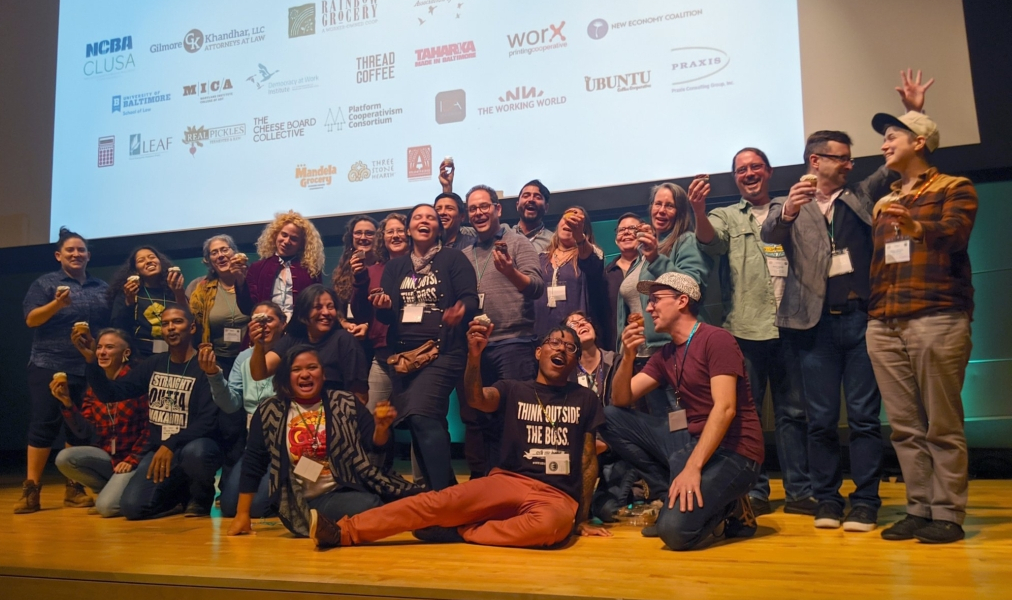
SECOSOL is a case in point. Board Vice President Heylin Rodriguez and I attended the 2019 Eastern Conference for Workplace Democracy together in nearby Baltimore. Six years later Heylin and I are still working together on the SECOSOL Board, and as new board members join us they tend to stay. This is in sharp contrast to my recent experience with other progressive organizations with which I've been active, where the tendency is for people to come and go in the blink of an eye, with only a few die hard activists around to keep things from completely disappearing, but without the wherewithal to move them forward in any meaningful way. A hundred years ago socialists had their own Summer camps, housing cooperatives, meeting halls and bookstores. We don't any longer. Joining together in a struggle to build our economic power through the solidarity economy can both make an immediate positive impact on our well being while also helping us create the sustained, trusted social relationships needed to build a movement for change.
Why the Solidarity Economy Movement Needs Socialists
Worker cooperatives are not enough. I don't know if the suggestion that they are is what keeps my socialist comrades from embracing them, but if it is, I hope by stating this clearly we can move beyond it and begin to seriously explore how we socialists should build the solidarity economy as an active part of our broader struggle for a socialist society.
Again, Daniel Wortel-London, who seems in his article to be channeling many of the concerns I've wanted to express for a long time but couldn't find a way to, begins his article with the following disclaimer, "Establishing worker-owned firms is no substitute for building a strong labor movement and a socialist presence within the state."
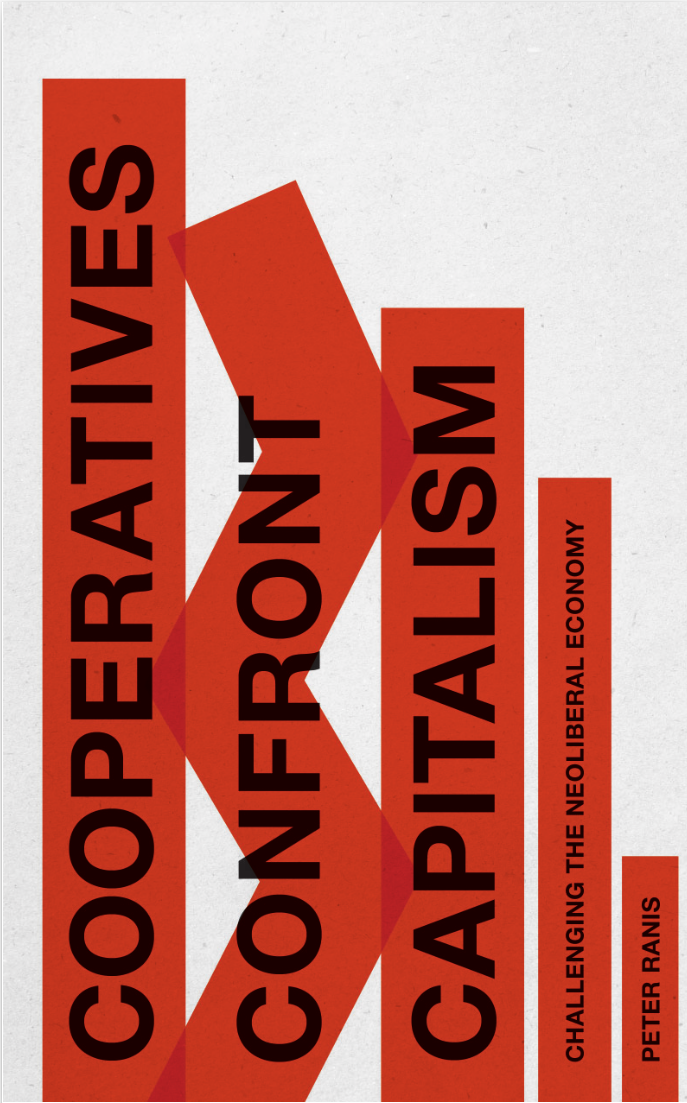
The required Eco Radicals reading for this week is an entire book devoted to expanding on that statement.Cooperatives Confront Capitalism: Challenging the Neoliberal Economy is a 2016 book by CUNY Professor Emeritus Peter Rainis. The first chapter takes us on a historical tour of cooperatives in Marxist thought, exploring some of what Marx, Engels, Rosa Luxemburg, Antonio Gramsci, Eduard Bernstein, and Eric Hobsbawm wrote about them, in addition to looking at the writings of the utopian socialists that influenced Marx. I am really glad to know this chapter exists, and will hopefully be able to use it as a resource when I am finally able to get my socialist comrades to take this crucial discussion seriously.
Our seminar meets in about an hour, so I need to finish this post soon. I don't have time to discuss the many valuable ideas presented in Dr. Rainis's book, but let me end with one powerful example that brings home the importance of winning state power if we truly wish to build a solidarity economy.
Dr. Rainis has spent years studying the worker owned factories in Argentina, and he devotes several chapters of this book to discussing them.
Long story short - you are a worker in a factory - say one that makes ceramics - in a country with an economy that is collapsing (some of us here in the U.S. may soon find ourselves in this very situation). The owners of the factory declare bankruptcy. It's time for the state, that special body of armed men, to step in. The state gets to decide (since it is the organization with the power to enforce its decision) what happens between two competing groups:
- The workers - who want to resume work, using the factory to restart production
- The creditors - who want to liquidate the factory, selling off everything they can to extract whatever wealth they can
Who wins in this competition has a profound impact on the workers in question and on society at large. I'm sure I don't need to tell you who usually wins this battle under a neoliberal capitalist regime. Just look at what happened to home owners after the financial collapse in 2008. Who got the homes? It wasn't the homeowners, that's for sure, since our neoliberal system can only side with the powerful financial interests, not with the people.
Anyone truly serious about building a solidarity economy will need to find a way to prevent the powerful interests who oppose them from showing up with court orders backed by people with guns to take away all they have built. Dr. Jessica Gordon Nembhard does an excellent job of documenting concrete examples of how this plays out in practice in her wonderful book, Collective Courage, which looks at over a hundred years of history of cooperatives in the African American community in the United States.
We won't be able to prevent such seizures without being able to control "the rules of the game", and that means getting involved with the political process and the state - local, regional, national, and international. Socialists have an understanding of how these processes work that may be lacking in some of our other solidarity economy comrades, and the solidarity economy movement needs this understanding if it is to succeed.
So there you have it, socialists and the solidarity economy movement need each other. Let's join forces and change the world together!
In solidarity, Jeff Elkner 12 February 2025